Every deckbuilder gets measured against Slay the Spire, and honestly — fair. It perfected the loop of picking cards under pressure and watching a build come online. Sealbound: Cthulhu Rising chases the same high, but takes a genuinely different road to it. Here's the honest comparison.
What feels the same
- The combo high. Sealbound's whole design goal is the moment a build breaks the game open — multipliers and triggers stacking until the numbers stop being reasonable. If your favorite StS memory is an infinite going off, that's the feeling we're tuning for.
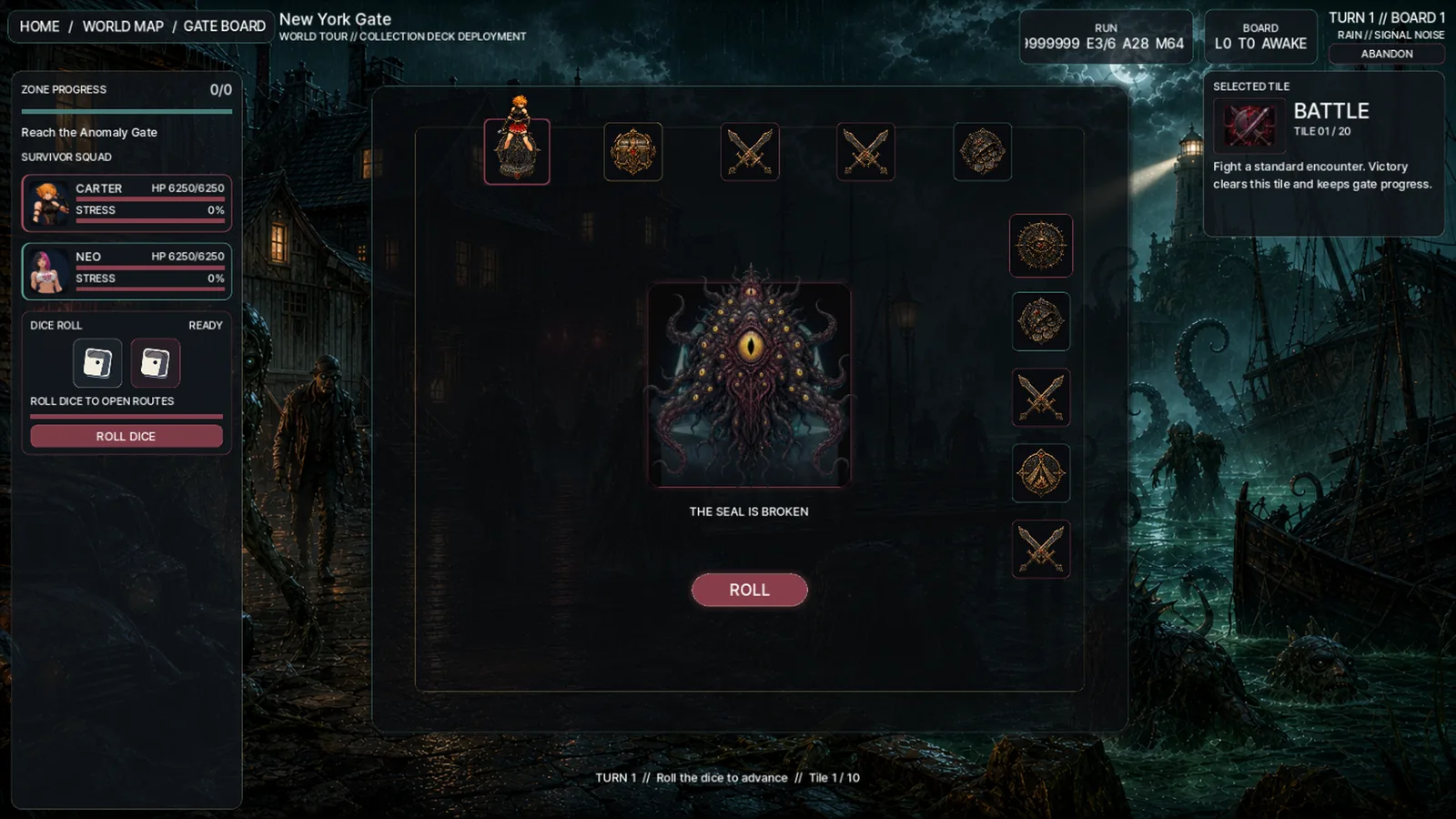
- Route decisions matter. Instead of a branching node map, every gate is a dice-driven board — battles, treasure, shops, rests, events, and elites laid out as tiles. Reading the board and routing well is half the strategy.
What's fundamentally different
Your deck doesn't reset
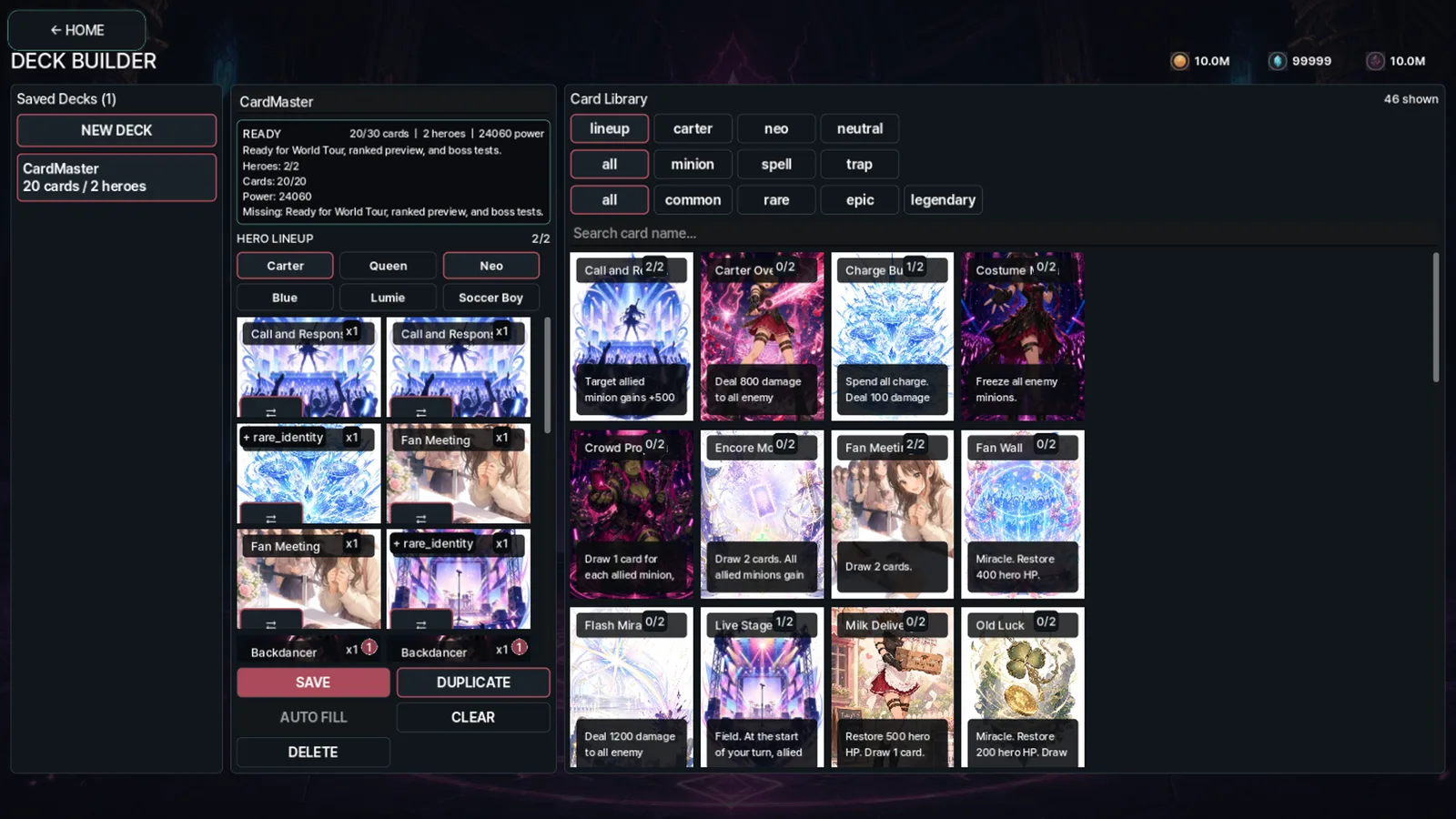
Slay the Spire is a roguelike: every run starts from scratch. Sealbound is a collection game — closer to a TCG. You own your cards permanently, build constructed 20-card decks around hero pairs, and improve the collection between runs with boosters and card enhancement. Losing a gate costs you progress on the world map, not your deck.
It's a campaign, not a run
The overworld is a 1930s Earth where gates tear open across real cities. Every failure pushes the Doom Counter toward ten; every gate purged drags it back. One long campaign arc — from Miskatonic Academy to a final raid on R'lyeh — instead of self-contained runs.
Bosses are puzzles, not stat checks
StS bosses ask "does your engine scale fast enough?" Sealbound's Mythos bosses — Nyarlathotep, Ithaqua, Hastur — each hide behind an immunity puzzle. You read the rule they're protecting, then build the specific line of cards that breaks it. Less damage race, more lock-picking.
Two heroes, one deck
You don't pick one character — you pair two heroes and build around their synergy. A pop idol who charms eldritch horrors backing a psychic charge engine is a legitimate meta pick.
So who is Sealbound for?
If you want infinite replayable runs, Slay the Spire remains the king — no argument. If you've ever wished a deckbuilder let you keep the deck you built, gave bosses actual mechanics to solve, and wrapped it all in a pulp-horror campaign with dice and a world to save — that's the exact gap Sealbound is built to fill.
Try the free demo on Steam and see how your first build holds up.